

What stucco problems are telling you
- Hairline cracks across a wall are often normal shrinkage or minor movement.
- Diagonal cracks from the corners of windows and doors usually mean framing movement or a missing control joint.
- Stains and streaks below parapets, windows or roof lines point to water running behind or over the stucco.
- Bubbling, soft or hollow-sounding areas often mean water has gotten behind the stucco and the bond has failed.
- Crumbling at the base of walls often comes from sprinklers, poor grading or no weep screed.
Fix the water first
Patching stucco without fixing the leak is a waste of money. The patch will fail again. Because we also handle roofing, parapets and windows, we trace the water back to where it's entering, whether that's a roof transition, a window without flashing, or a canale draining into the wall, and fix that first.
Our repair process
- Cut back to sound stucco. Damaged material is removed in clean, straight lines.
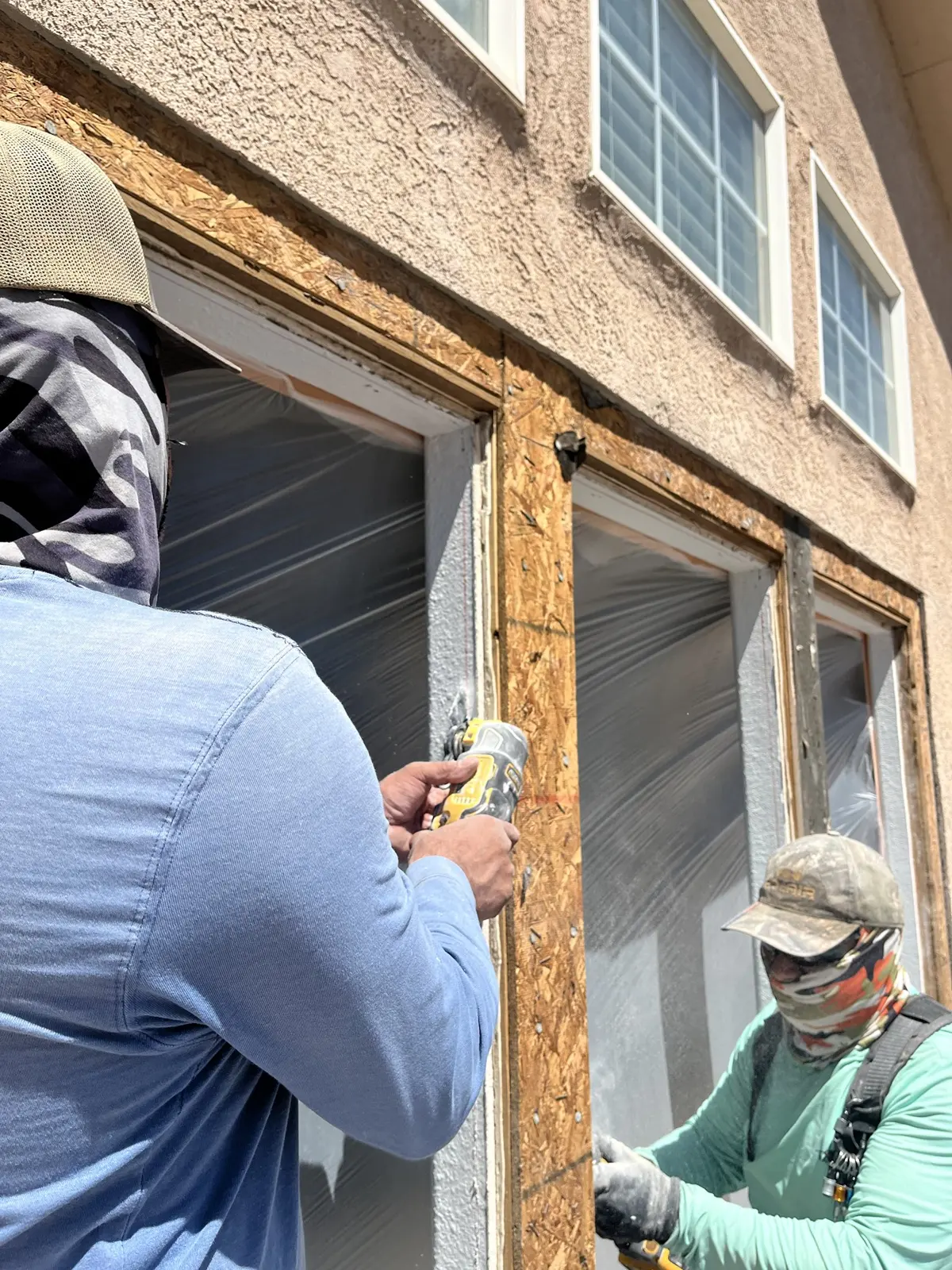
- Repair what's behind it. Wet sheathing, rotted framing, torn paper and rusted lath are replaced.
- Weather barrier. New building paper is woven into the existing barrier so water drains down and out.
- Lath. New metal lath fastened properly over the paper.
- Base coats. Scratch and brown coats, each given time to cure.
- Finish coat. Color and texture matched to the existing wall as it looks today.
Color matching
New Mexico sun fades stucco unevenly, so a wall rarely matches its original color chip. We match the patch to the wall as it is now. On heavily faded walls, the cleanest result often comes from re-coloring a whole wall section between natural breaks, so no patch outline shows. We'll talk through options before we start.
Re-coating and re-stucco
When a building has widespread hairline cracking or chalky, faded color, a new finish coat or an elastomeric coating can refresh the whole exterior. When the stucco is failing broadly, delaminating or water-damaged in many places, full re-stucco may be the better investment. We'll show you what we find and lay out the options and costs.
Stucco and adobe
Older adobe and earthen-wall buildings need breathable finishes. Cement stucco over adobe can trap moisture and damage the wall. For those buildings, we discuss lime-based or other compatible finishes, and bring in plaster specialists when the work calls for it.
Questions about this work
Why does my stucco keep cracking in the same place?
Usually because something behind it is moving or wet. We find and fix the cause before patching.
Can you match my stucco color?
Yes. We match the wall as it is today. On heavily faded walls, we may suggest re-coloring a full section.
When should a house be re-stuccoed instead of patched?
When failures are widespread, the stucco has delaminated, or water damage is extensive. We'll show you what we find.