
Roofs fail at the edges, not in the middle
Most roof leaks we're called about don't come through the middle of a roof field. They come in where the roof meets something else: a stucco wall, a chimney, a skylight, an evaporative cooler curb, a vent pipe, a valley, or the parapet on a flat roof. Those transitions depend on flashing, and flashing is the part of the job that's easiest to skip and hardest to see once the roof is done.
Tim has worked in roofing for about ten years, and our approach comes from that experience. Every scope we write lists the flashing details: drip edge, step flashing at sidewalls, counter-flashing cut into stucco or masonry, pipe boots, cricket flashing behind chimneys, and how each penetration will be sealed.
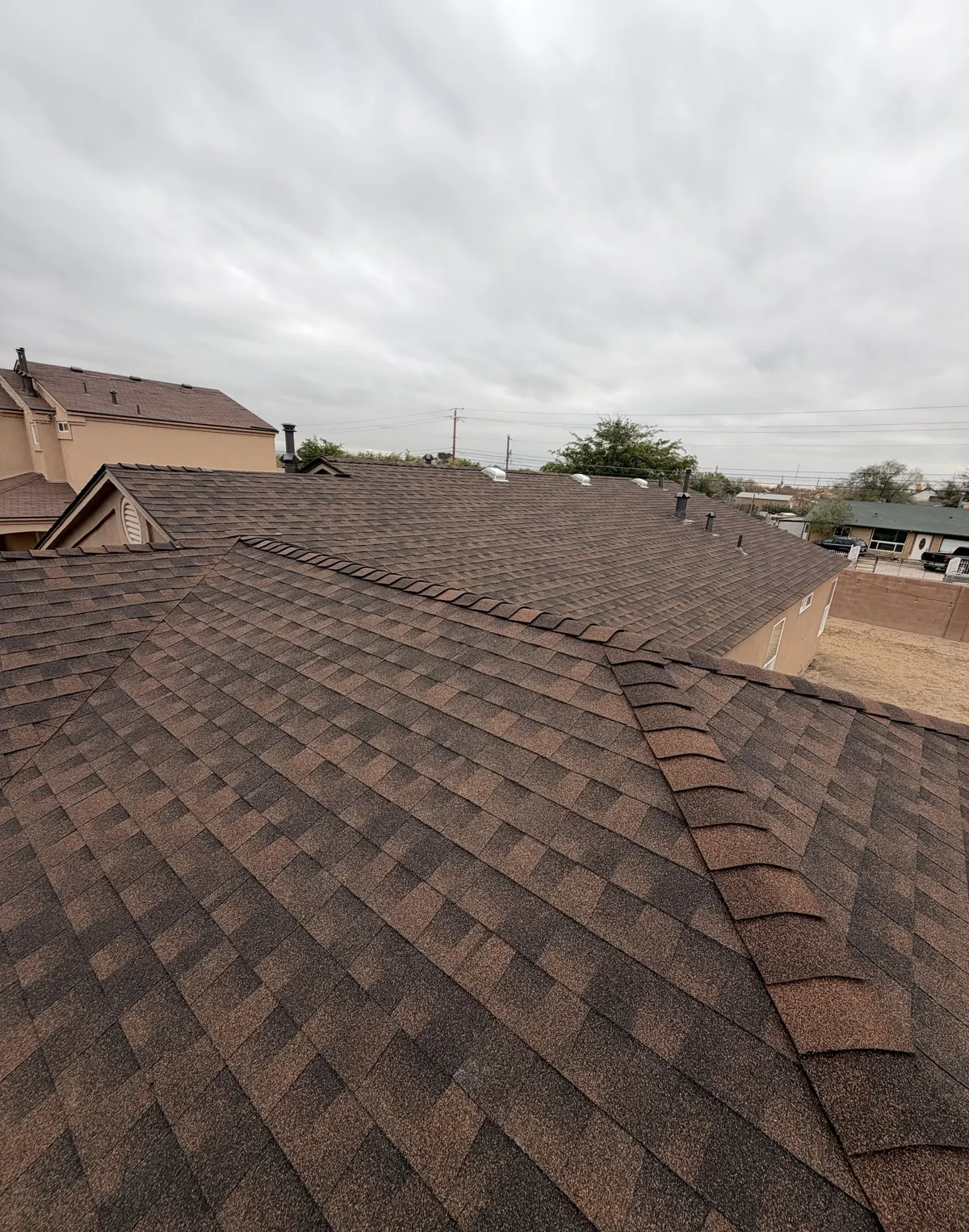
Asphalt shingle roofs
Architectural asphalt shingles are the most common pitched roof in the Albuquerque area. We install systems from major manufacturers, including GAF, Owens Corning and Malarkey, using the manufacturer's recommended underlayment, starter strips, ridge caps and ventilation components. Following the full system matters, because it's what the manufacturer's warranty is built around.
- Full tear-off to the deck, with damaged decking replaced.
- Ice and water barrier at eaves, valleys and other vulnerable areas where appropriate.
- Synthetic underlayment over the remaining deck.
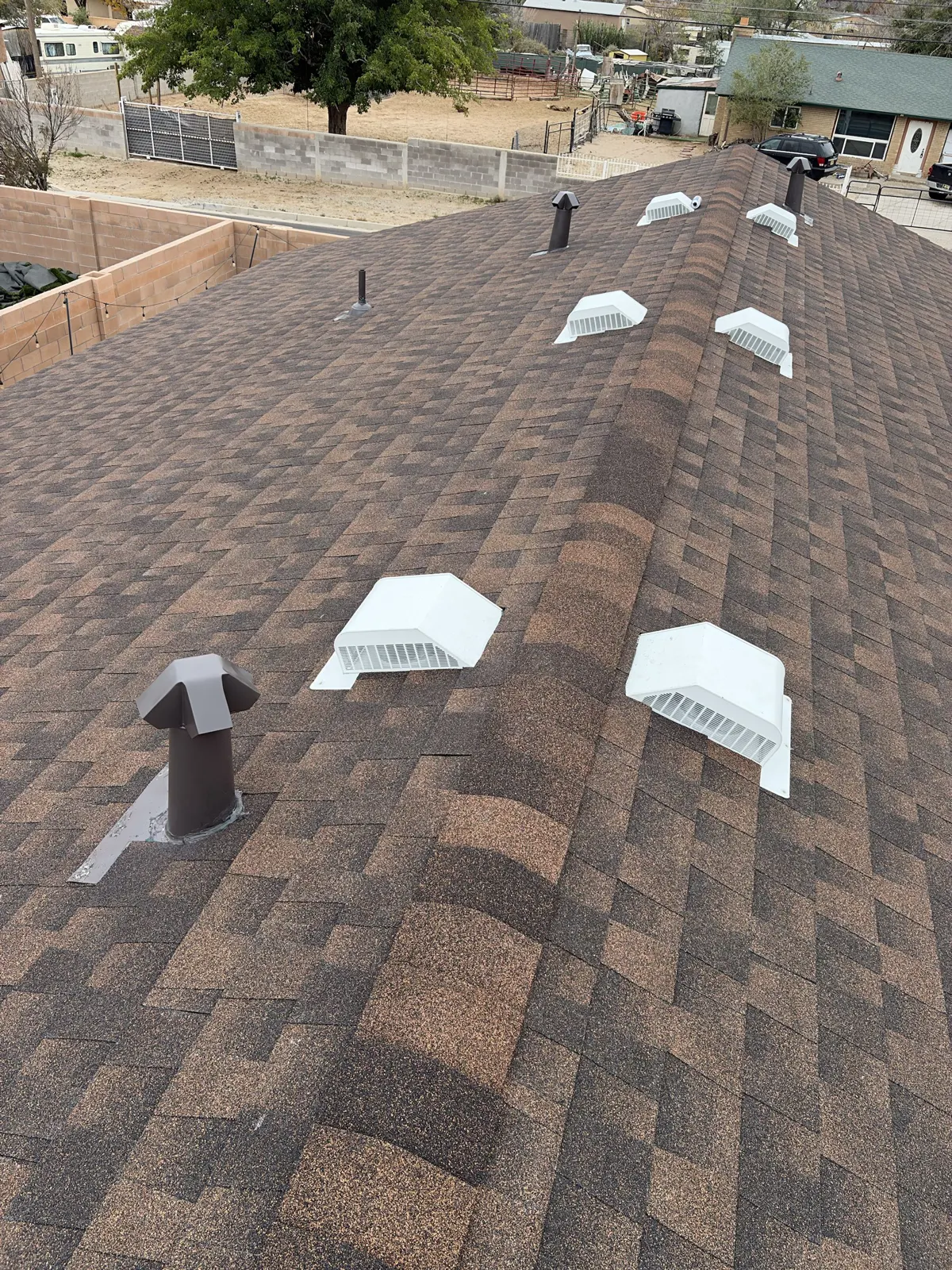
- New drip edge, flashing and pipe boots.
- Balanced intake and exhaust ventilation.
- Magnetic sweep and cleanup at the end of each day.
Metal roofing
Metal roofs are popular in the East Mountains, on rural properties and on homes where owners want a roof that will outlast them. Standing seam and exposed-fastener panels each have their place. Metal sheds snow, resists hail better than many materials, and reflects a good share of summer heat. The details that make or break a metal roof are panel attachment, trim at the eaves and rakes, and how the panels are flashed at walls and penetrations.
Low-slope and flat roofs
Flat and low-slope roofs are their own specialty, with membranes, tapered insulation, parapets and drainage. See our flat roof and parapet page for how we handle them.
Repairs
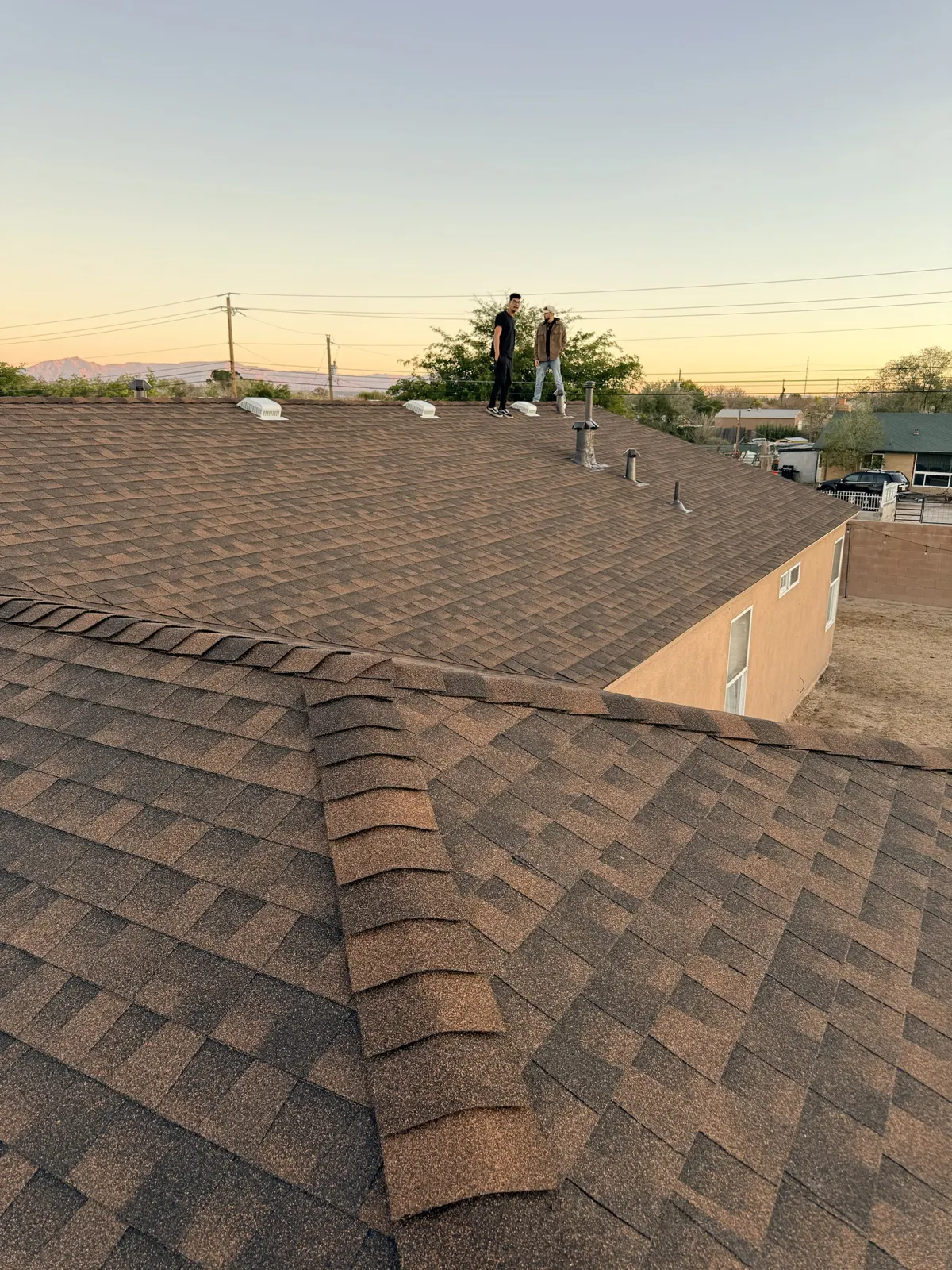
Not every leak needs a new roof. Many can be fixed with targeted repairs: re-flashing a sidewall, replacing a cracked pipe boot, rebuilding a cricket, or repairing storm-damaged shingles. We'll tell you honestly whether a repair makes sense, or whether the roof is near the end of its life and repairs would only buy a short time.
Hail and wind damage
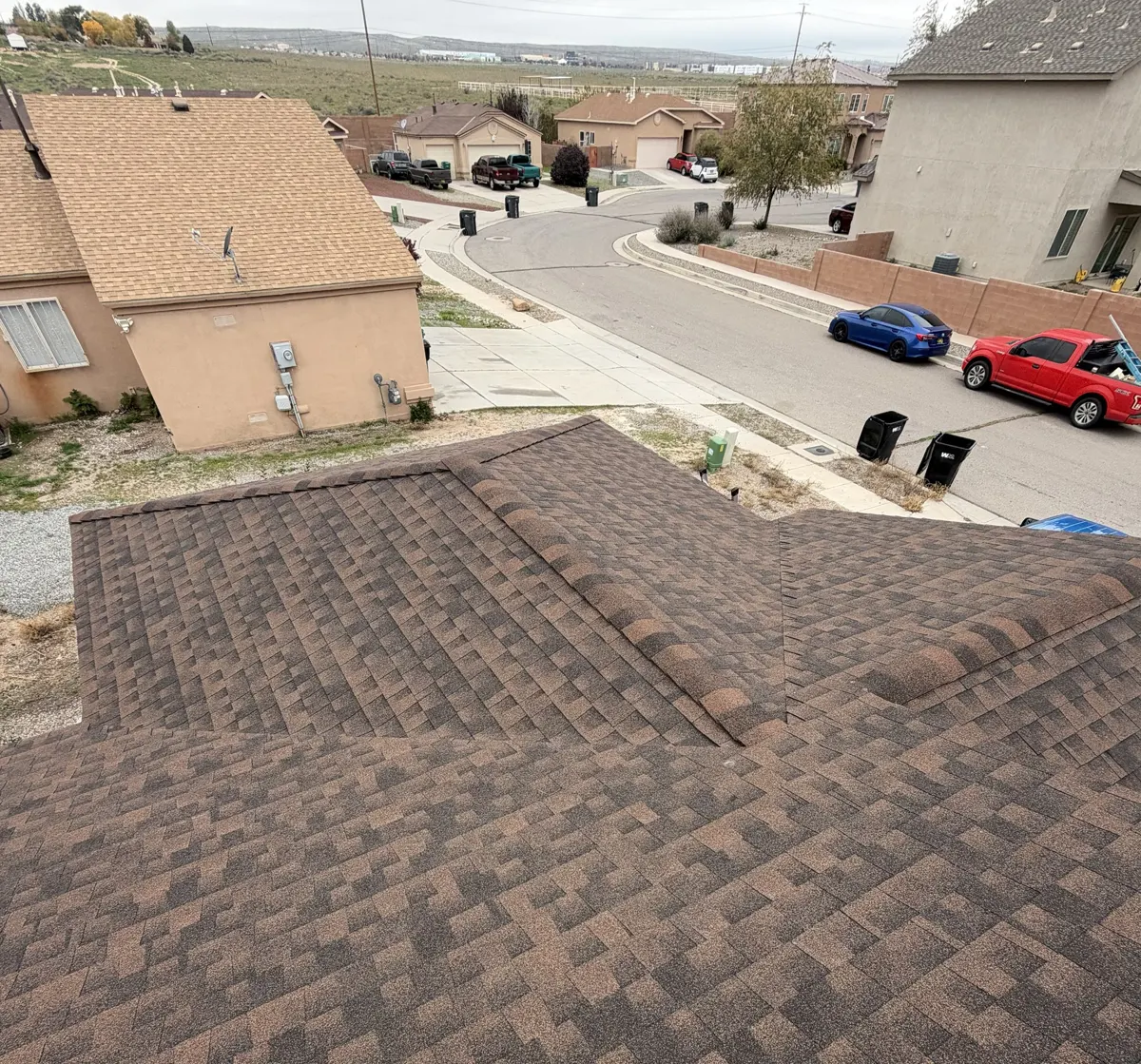
Albuquerque gets hail and wind storms that can damage shingles, dent metal and tear off flashing. After a storm, we can inspect the roof, document damage with photos, and provide a written scope and estimate for your insurance claim. Decisions about coverage belong to your insurer.
Gutters and downspouts
A good roof can still damage a house if the water it sheds lands against the stucco or pools at the foundation. Where a roof needs them, we install seamless gutters and downspouts sized for monsoon downpours, in colors that suit the house, so water is carried away from walls, windows and doorways.
Inside the attic
A roof inspection isn't complete without looking underneath. We check the attic for water stains, daylight at penetrations, damp insulation and poor ventilation. Many "roof" problems are actually ventilation problems that cook shingles from below or cause condensation in winter.
Questions about this work
How long does a re-roof take?
Most homes are done in a few days once materials arrive, depending on size, complexity and weather.
Do you repair roofs or only replace them?
Both. If a repair will solve the problem for a reasonable time, we'll recommend it.
Which shingle brands do you install?
We install systems from major manufacturers including GAF, Owens Corning and Malarkey.
Can you help with a hail damage claim?
We can inspect, photograph the damage and provide a written scope and estimate. Coverage decisions are up to your insurer.